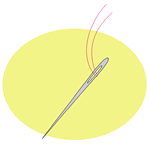
When it comes to choosing a needle for paper embroidery it is really a matter of what works best for you. If you have a range of needles in your […]
Techniques
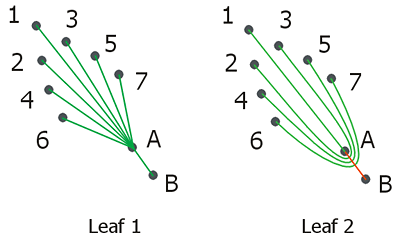
How to convert fan stitch to loop stitch on a leaf
Stitched leaves often employ a fan style stitch where most of the thread goes from points on the rim of the leaf into a single hole where it joins the […]
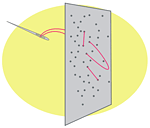
How to find the correct hole to stitch from the back of the card
As you know 50% of the work is stitched from the back of your card and 50% is stitched from the front. The stitching diagram shows you the view of […]
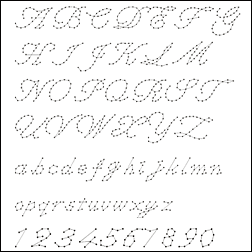
How to add a stitching font to your computer
There are several stitching fonts available from the Stitching Cards web site. When one of these is installed on your computer you can use any of your word processing programs […]
What else do you do whilst stitching cards?
People sometimes ask if I do my own stitching when I design a card. The answer is that I do stitch them myself. I see it as part of the […]
How to work the ‘S’ curve stitch
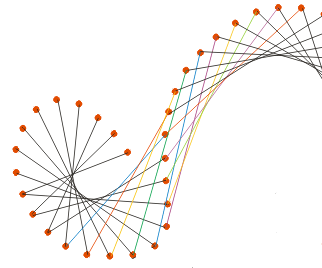
When a pattern includes an S shaped curve that is worked with evenly spaced stitches along its length it is hard to visualise. The section where the curve changes from […]
How to stitch a complex pattern
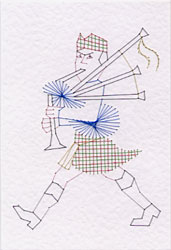
Some prick and stitch patterns are easy to follow whilst others are very complex. The easy ones tend to have shapes based on circles and curves. When the design involves […]
How to check for missed holes when pricking out your pattern
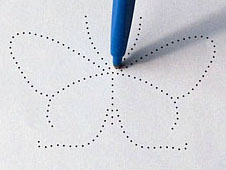
When you are stitching your pattern it is very inconvenient and confusing if you missed one or two holes when you were pricking it out. This is most likely to […]
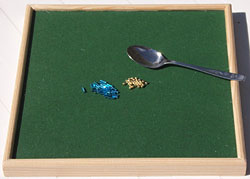
A bead tray for prick and stitch card making
If you make a lot of stitching cards with beads it is worth getting, or making, a bead tray. This will keep your beads in one place and stop them […]
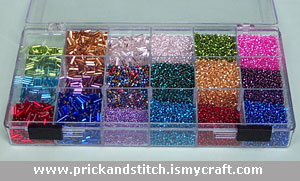
Bead storage for prick and stitch card making
When I purchase my beads they usually come in small plastic bags. As my bead collection grew I saw the need for an improved way of storing them. Fortunately most […]
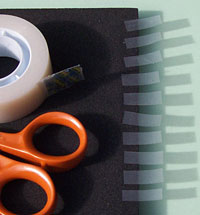
Self-adhesive tape for attaching stitching card threads
What kind of tape do you use to attach the threads to the back of your stitching card? I am currently using Sellotape invisible tape. There is a similar type […]
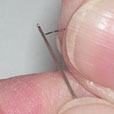
Beading needle tips for prick and stitch card making
Small seed beads and bugle beads require the use of a much thinner needle than I use for the non-beaded stitching. I use a size 10 English beading needle. These […]